The right part, once

Toilet repair that replaces what actually failed

A toilet running through the night, shifting when you sit down, or leaving a puddle at the base after each flush is usually one worn part away from a real fix, and identifying that part comes before anything gets touched.

  • Common tank and fixture parts on hand
  • Serving Davie and the rest of South Florida
  • 5.0 rating across 21 Google reviews
Q.

Why won’t my toilet stop running after a flush?

Two small parts inside the tank are almost always responsible. One is the flapper, a rubber disc that seats over the drain and is meant to hold water in the tank between flushes. The other is the fill mechanism that senses the water level and stops the refill once the tank is full. When the flapper sits crooked or has gone stiff with age, it lets water slip past continuously, so the fill mechanism keeps working to replace what’s escaping, and that constant back-and-forth is the sound you can’t get to stop.

Neither part costs much, and either one is a quick swap once identified. What’s worth asking, though, is why it failed early in the first place: Davie’s water carries enough dissolved mineral content that rubber components here tend to give out sooner than the same parts would somewhere with softer water.

WHAT WE FIX

The calls we get most

  • Runs constantly, or in short bursts

    A worn flapper, a worn fill mechanism, or both working against each other. Whether it never stops or just cycles every few minutes, the underlying cause is usually the same pair of parts.

  • Water shows up at the base after flushing

    Points to a failing wax seal between the toilet base and the floor drain, a fix that means lifting the toilet, not just running a bead of caulk around the outside.

  • The flush feels weak or incomplete

    A supply valve that isn’t fully open, a rim clogged with mineral scale, or a flapper dropping shut too soon and cutting the flush off early.

  • Shifts or rocks slightly when you sit

    Puts ongoing stress on that wax seal, and given enough time, usually ends in a leak at the base once the seal finally fails.

  • Needs a second flush more often than it should

    Older low-flow models sometimes can’t clear the bowl in one pass. If a plunger doesn’t fix a recurring pattern, the issue may sit further down the line rather than in the toilet.

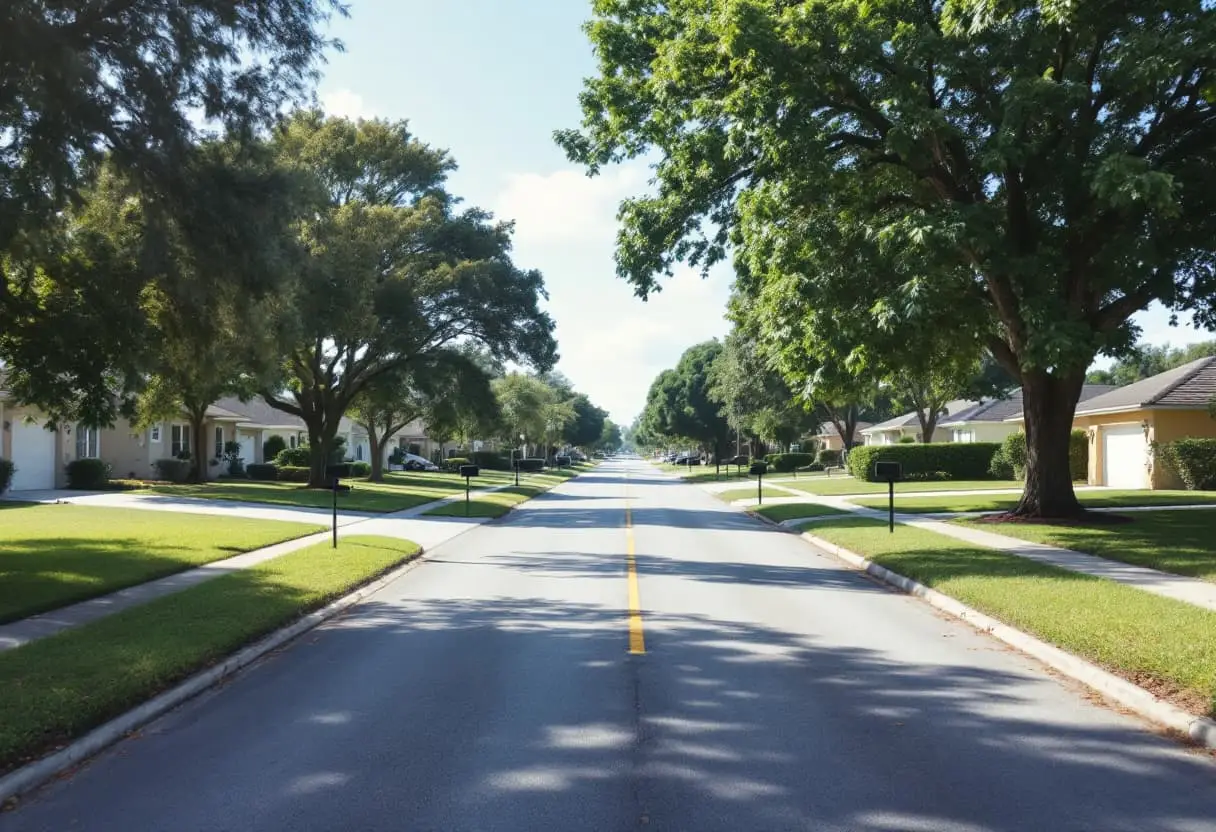
A quiet residential street lined with mature trees and single-story homes on a sunny afternoon, typical of Davie’s older tract neighborhoods

Fig. A quiet residential street lined with mature trees and single-story homes on a sunny afternoon, typical of Davie’s older tract neighborhoods

DAVIE, SPECIFICALLY

What shapes most of the toilet calls we take here

A whole neighborhood built, and aging, together

Central Davie’s housing stock largely dates to a single stretch, roughly the 1970s into the 1990s, so the internal toilet parts across a street, flappers, fill assemblies, flush handles, tend to reach the end of their life within the same few years. It isn’t unusual to replace the same part in three or four houses on one block in a single season.

Some Davie bathrooms don’t run to a sewer at all

Homes west of University Drive are often tied to a septic tank and drain field rather than the municipal system, and that setup reacts far more harshly to what gets flushed, wipes, heavy paper, harsh cleaners, than a city sewer connection ever would.

A power outage can silence a toilet, not just the lights

A toilet on well water depends on an electric pump to refill the tank after every flush. When a hurricane knocks out power on the well-and-septic side of town, that toilet can sit empty between flushes even though nothing inside it is actually broken.

Before you call

Quick answers

Can I replace the flapper myself?

Usually, yes, it’s about as approachable as home plumbing repairs get. If a fresh flapper doesn’t quiet things down within a day, look to the fill mechanism or the flush valve seat instead.

Does a running toilet actually add much to my water use?

More than most people guess, since it’s constant rather than occasional. A toilet running non-stop for a full day can burn through a surprising volume, sound or no sound.

How can I tell if it’s the wax seal and not something else?

Water appearing at the base right after a flush, combined with a toilet that shifts slightly when you sit, points squarely at the seal. A caulk bead can mask it visually while the subfloor keeps soaking it up underneath.

Do you swap the whole toilet, or just the failed part?

Just the part, almost every time. A full replacement only makes sense when the bowl or tank is physically cracked, seriously outdated, or you’ve decided you want an upgrade anyway.

My house is on septic. Does that change how you’d fix it?

It changes what we’d flag for you going forward more than the repair itself, since a drain field responds to flushed material very differently than a sewer line does.

Ready when you are

Fix the part now, skip the floor repair later

Swap the actual failed part before a quiet leak turns into water damage under the tile.

Serving Davie and South Florida, 24 hours a day.

Firm

Davie Emergency Plumbing SFL

Coverage

58areas3counties

Rev.

2026

(754) 304-0006