Confirmed with a camera, not guessed

Cast iron pipe replacement, once we’ve actually seen inside it

A handful of drains running slow at once, rust-tinted water backing up, or a damp patch near a low floor spot: cast iron fails from the inside over decades, so we scope the line with a camera first, never off age alone.

  • Camera-confirmed before any recommendation
  • Serving Davie and South Florida
  • Trenchless lining considered where the pipe allows it
Q.

How do cast iron drain lines actually fail, and how do you know mine has?

Cast iron corrodes from the inside as decades of waste and moisture pass through it. Scale builds up along the interior wall, gradually narrowing the pipe’s usable diameter across the whole run rather than at one blocked point, while the same corrosion eventually pits all the way through, opening leaks at low spots and joints. Because the narrowing happens everywhere at once, a home on cast iron typically shows several sluggish drains together, not one obvious clog, which is itself a useful clue before a camera ever goes in.

Age alone does not confirm anything, since a pipe’s actual condition can vary widely even within the same run. That is why we run a camera through the line before recommending a repair path: it shows the scale, the pitting, and whether the pipe has collapsed anywhere, and that picture is what determines whether a targeted patch, a trenchless liner, or a full replacement is the right call, not a guess based on how old the house is.

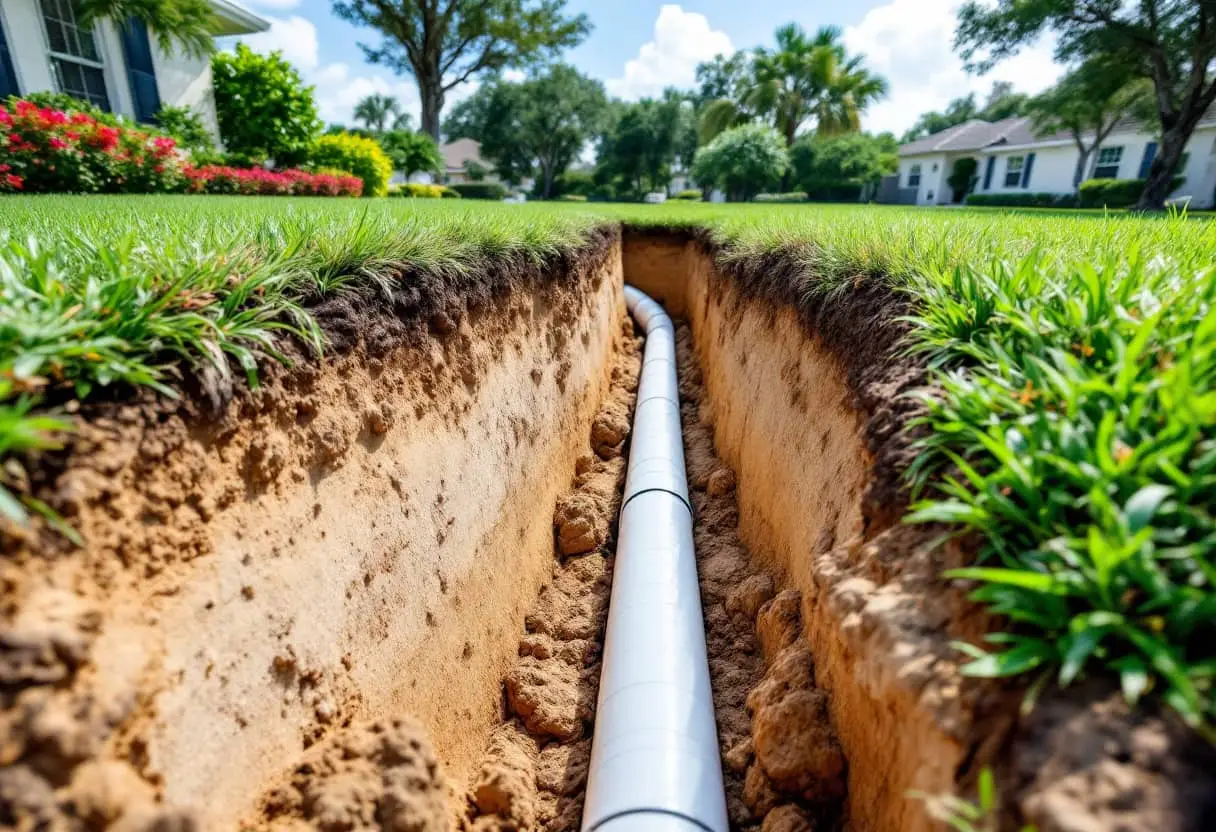
WHAT CAST IRON FAILURE LOOKS LIKE

Signs worth a camera check

  • Several drains running slow on the same day

    Points at scale narrowing the shared line generally, rather than one fixture with its own localized blockage.

  • Water backing up with a rust or orange tint

    A sign the corrosion inside the pipe has become active enough to show up before a full backup happens.

  • A sewage smell or damp patch near a low floor line

    Can mean a pinhole has opened at a corroded section, worth checking before it becomes a wet spot you can’t ignore.

  • A camera confirms scale, pitting, or a collapsed section

    The only way to know for certain, since two runs installed the same year can be corroding at completely different rates underground.

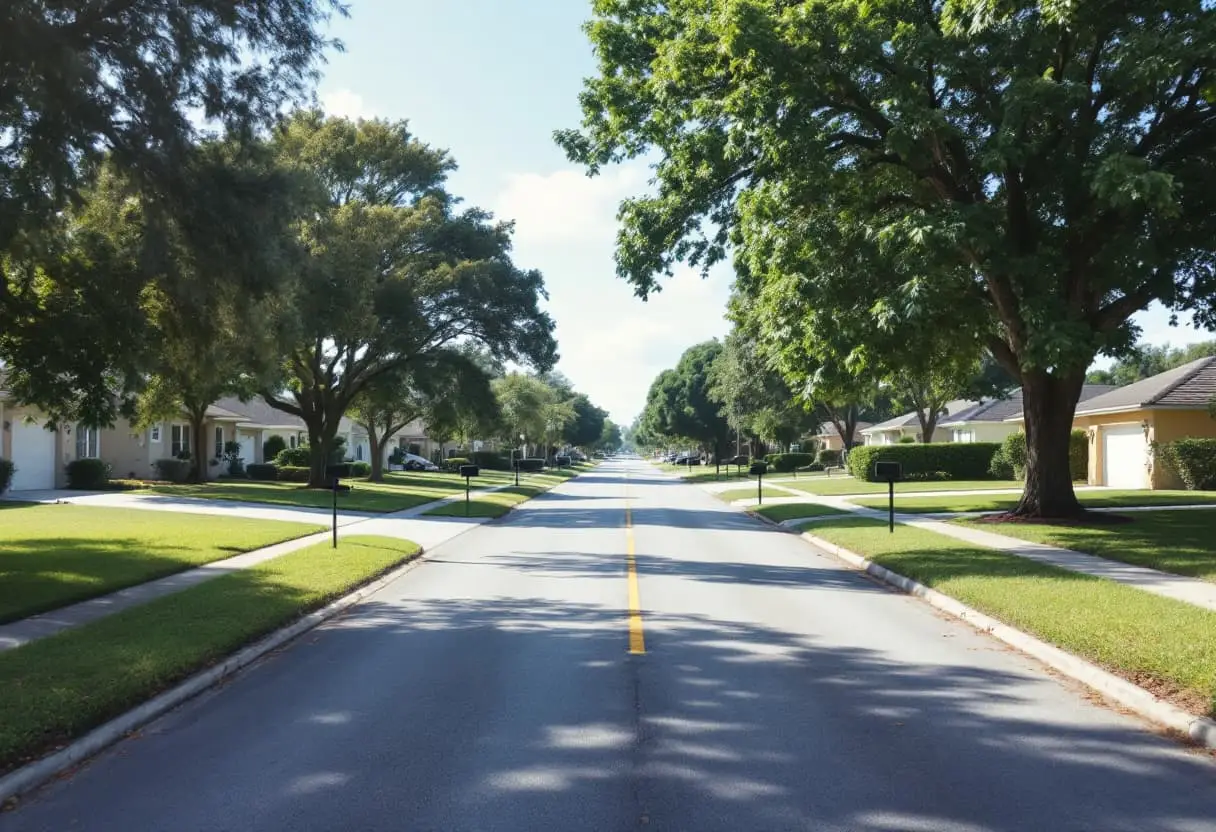
A residential street of single-story homes with grass swales and mature shade trees

Fig. A residential street of single-story homes with grass swales and mature shade trees

DAVIE, SPECIFICALLY

Where cast iron actually turns up in this city

Most of Davie was built after cast iron’s common era, which narrows where this call actually comes from.

The oldest pockets of town, not the tract boom

Cast iron drain pipe was standard through roughly the 1970s, so it turns up in Davie’s original town-core homes and the earliest 1970s tract sections, while most of the 1980s and 1990s housing was built on PVC instead.

Slab-on-grade means the line usually runs under the floor

With no basement or crawlspace to access it from below, a cast iron run in a Davie home is typically embedded in or under the slab, which is exactly why a camera scope through an existing cleanout comes before any decision about digging or lining it.

Broward County permitting covers the replacement itself

Whether the fix ends up being a trenchless liner or an open trench section, the permit and inspection process is the same countywide process, and we handle that as part of scheduling the job.

Questions we get

Before you call

Can I tell if my drain lines are cast iron without a camera?

Sometimes, if a section is visible in a utility area or garage, by its material and markings. Confirming what’s under the slab or inside a wall needs a camera.

Does finding corrosion in one spot mean the whole line has to come out?

Not necessarily. When the camera shows the damage concentrated in a single run, a targeted swap or a trenchless liner limited to that section is frequently all that is needed.

Is trenchless lining actually an option for cast iron?

In many cases, as long as the pipe hasn’t collapsed structurally. The camera scope is what tells us whether lining is realistic or full replacement is the safer call.

Will fixing this mean breaking up my slab?

Not automatically. Depending on where the section sits and what the scope shows, a trenchless liner or an isolated dig can sometimes avoid opening the slab at all.

Is this even likely to be relevant to my Davie home?

For most of the city, no, since the housing here mostly postdates cast iron’s common use. We confirm it with a camera rather than assume from the neighborhood’s age.

What happens if the line really is cast iron and failing?

Depending on the scope results, either a trenchless liner or a section of PVC replacement, and we’ll walk through the tradeoffs in disruption before recommending either one.

A few drains running slow at once?

Let’s see what’s actually inside the line

A camera scope tells us the real material and condition before anyone talks about digging or lining anything.

Serving Davie and South Florida, 24 hours a day.

Firm

Davie Emergency Plumbing SFL

Coverage

58areas3counties

Rev.

2026

(754) 304-0006